
The Church of San Giovanni a Carbonara is one of the most significant monuments and rich in history in Naples.
The name of the church derives from ad carbonetum, a place intended for the burning of city waste, and is dedicated to St. John the Baptist.
This jewel represents an important testimony of Gothic architecture and, in particular, of the transition to the Neapolitan Renaissance.
Don't just look, but come and find out. Take part in the free experience and join us to reveal the secrets of San Giovanni a Carbonara, a real Renaissance sculpture museum that fears no comparison in Naples or Italy.
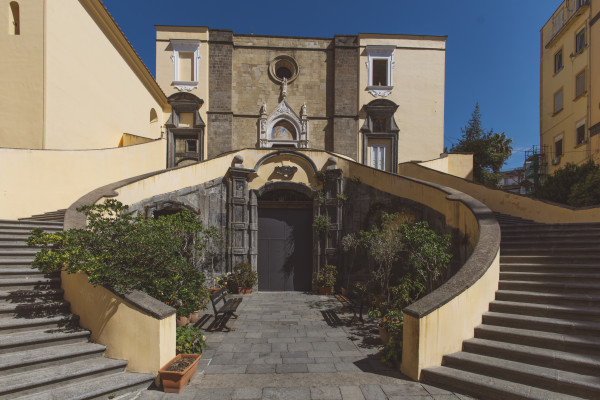
- • The entrance is embellished by the monumental staircase in Piperno by Ferdinando Sanfelice.
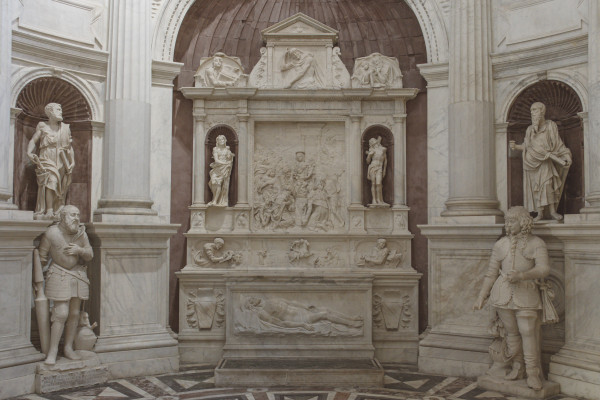
- • Discover the Miroballo altar, built at the end of the 15th century, with preserved statues almost intact and architectural motifs that make it unique in its kind.
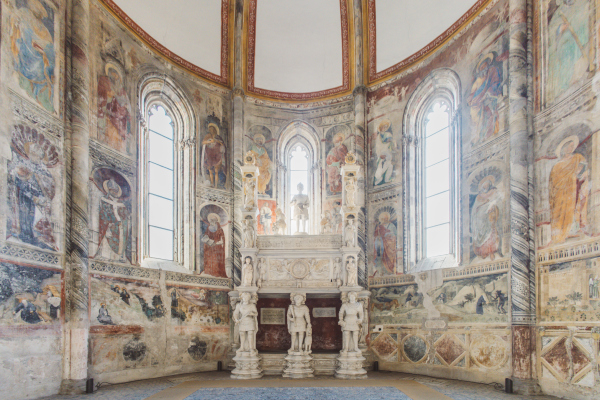
- • The interior is dominated by the imposing mausoleum of King Ladislao, a sculptural excellence of inestimable value.
| Included | Free discovery experience at the Church of San Giovanni in Carbonara |
|---|---|
| Duration | 0 Hour |
| Important information | In case of delay we will not be able to guarantee access, so it is advisable to be 15 minutes ahead of the reservation. After this period of time, the reserved seats will be sold to any visitors on site. The experience is free, reservation is required. During the Eucharistic celebrations and moments of prayer, all experiences of discovery, even those conducted by private groups, are suspended. |
Further information
Its construction was started in the 1930s of the fourteenth century thanks to the donations of the Neapolitan patrician Gualtiero Galeota.
The building has a complex structure: to access it you climb monumental stairs with a tongle structure, the result of the ingenuity of the Neapolitan architect Sanfelice.
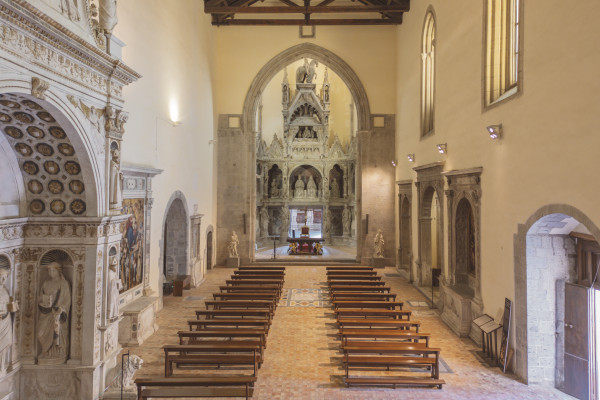
The interior, with a single nave, has a rectangular plan and a ceiling with wooden trusses.
The church has the typical lines of architecture of the late Angevin age and houses an extraordinary heritage of art, born from the convergence of the greatest masters of the Renaissance. In the fifteenth century, Ladislaus of Durres - king of Naples and Jerusalem from 1386 to 1414 - enlarged the church and enriched it with precious marblade.
The work continued later also with the king's sister, Giovanna II, who had the great funeral monument of the apse erected for her brother.
During the Renaissance period the convent lived its maximum artistic and cultural expansion, also becoming a meeting place between men of culture of the Neapolitan panorama, such as Giovanni Pontano, Jacopo Sannazaro and other illustrious humanists.
Subsequently, although the devastating earthquake of 1688 had caused serious damage to the structure, the restoration work made it possible to build an educated and a noviate, transforming the Augustinian convent into one of the most renowned schools for the Neapolitan nobility and for the servants of aristocratic families.
Come and experience the art and history of Naples in a completely new and engaging way thanks to the MuDD project - Museo Diocesano Diffuso. We are waiting for you in San Giovanni a Carbonara: your adventure is about to begin. And knowledge has never been so accessible.
